The marquee still says Esquire. For decades it was the theater that gave this stretch of Oak Street its name, the place people meant when they said "meet me at the Esquire" long before anyone thought to reserve a table there. This summer it reopened, not as a cinema, but as a 265-seat restaurant from MStreet Collective that channels the building's old glamour through a wagyu program sourced from Japan, Australia, New Zealand and the United States. The theater's bones are still doing the work. Retractable glass now opens where the screen used to face the crowd, and the seating pulls you through a sequence of rooms instead of rows.
That much has already made the rounds in Chicago's food press this fall. What hasn't gotten as much attention is what's tucked inside the same building, behind a second door most people walking past will never notice.
The Restaurant You Can Walk Into, and the One You Can't
Inside Esquire, past the dining room and the private rooms built for larger parties, there's a members' club. Inside that club is ŌakSho, a twelve seat omakase counter that wraps around a sushi chef's station and runs five nights a week, two seatings a night. The tasting menu is sixteen courses, priced at $285, and moves through caviar, uni, a run of fish flown in from Toyosu, and a closing progression of A5 wagyu. Non-member seats exist, but they're limited, and the room itself is built to feel found rather than found out.
As Yahoo Finance reported when the project was announced, Chris Hyndman, the founder and CEO of MStreet Collective, said: "Oak Street is its most discerning address." He wasn't talking about price point. He was describing a street where the most interesting thing happening on any given block is usually the one you'd walk past without a second look.
That's the pattern worth noticing here, and it isn't limited to one restaurant. A few blocks over, the Charnley-Persky House, the 1891 Louis Sullivan design with a young Frank Lloyd Wright's hand in it, now serves as headquarters for the Society of Architectural Historians. It opens for docent led tours twice a week. Not daily. Twice. The building announces almost nothing about itself from the sidewalk. You either know to ask, or you don't.
Oak Street's storefronts do the opposite work. The boutiques along the block and the six levels of the 900 North Michigan Shops are built to be seen, to draw the eye, to advertise exactly what's inside. That's the front door version of the street. But the version locals actually rely on runs on the twelve-seat room behind the larger dining room, the twice-weekly house tour, the reservation you need a connection to get rather than an app. The street rewards people who know what's behind the door, not just what's lit up in the window.
Why the Timing Lines Up
There's a second thing happening on this stretch of the Gold Coast right now that has nothing to do with restaurants and everything to do with why foot traffic is shifting toward Oak Street instead of away from it.
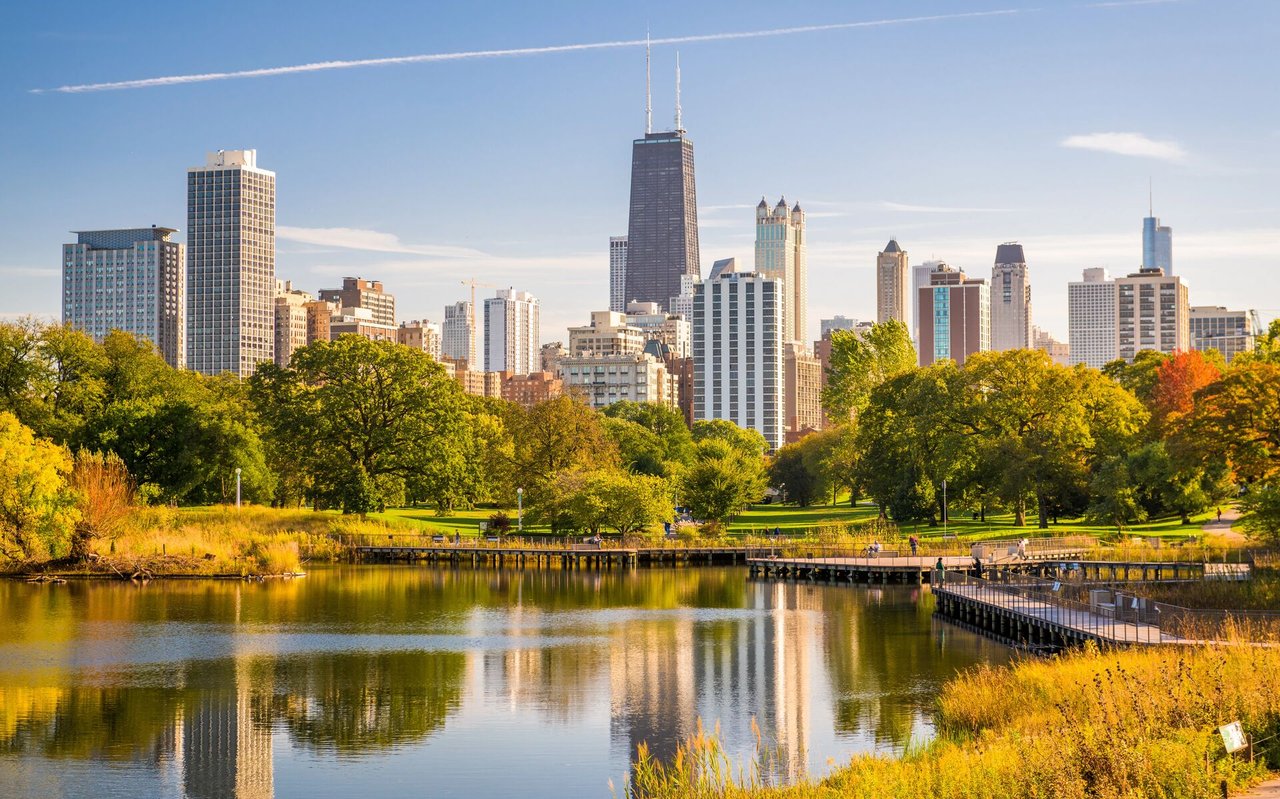
The city's official 2026 lifeguarded swim season at Oak Street Beach ended September 7, on Labor Day. The Chicago Park District is now running maintenance work along sections of the Lakefront Trail, starting at the south end and moving north, with signage posted ahead of active work zones. That means the sand and the swimming crowd that own this beach every summer have thinned out for the year, and the trail itself is in the kind of patchwork condition that makes people plan around it rather than default to it.
None of that empties the neighborhood out. It redirects it. The volleyball courts and beach chairs at Oak Street Beach were never really competing with the boutiques and restaurants a block inland, but they did pull attention toward the water for a few months every summer. Once that pull weakens, the block that's left standing with something new to offer is the one that just reopened a landmark. The Esquire's timing isn't a coincidence so much as a predictable handoff. Chicago's lakefront runs on a seasonal calendar. Oak Street runs on whatever's currently worth walking to. This fall, for the first time in a while, those two calendars are handing the moment to the street rather than the shore.
What a Fall Walk on This Block Actually Looks Like
If you're heading out from the Gold Coast this month, the useful version of "go check out the lakefront" has changed slightly from what it was in July.
- The Lakefront Trail is still walkable, but sections are under active maintenance moving from south to north, so a walk that starts clean at Oak Street may hit a detour further along. Check posted signage before committing to a long stretch.
- Swimming is done for the year. The beach itself is still open for walking, and the underpass at Oak Street still connects you to it, but the volleyball nets and lifeguard stands that defined the summer version of this block are gone until next Memorial Day weekend.
- Oak Street itself is the more reliable destination right now. Between the boutiques that have anchored the block for years and Esquire's new dining room, there's more reason to walk the street than the sand this month.
- If architecture is the draw, the Charnley-Persky House tours run twice weekly and are the kind of stop that rewards planning ahead rather than showing up.
None of this is a dramatic shift in how the Gold Coast operates day to day. It's a small, seasonal recalibration, the same one that happens every September, except this year it happens to land right on top of a building reopening that gives the street something genuinely new to offer instead of just the usual retreat indoors.
The Building Did the Same Thing Twice
There's something almost circular about what's happened to this address. A theater that used to give people a reason to leave their apartments and sit in the dark with strangers has become a restaurant that gives people a reason to leave their apartments and sit in a different kind of room with strangers, one built around a fish market delivery schedule instead of a film reel. The public dining room does the job the old marquee used to do. It tells you, from the sidewalk, that something is happening here. The hidden room upstairs does the job the theater's back rows used to do, the quieter, more private version of the same experience, available to the people who know to look for it.
Oak Street has always worked this way. The street sells itself loudly through its storefronts and then delivers its best material quietly, through the tour you have to schedule and the counter you have to be told about. The Esquire didn't invent that rhythm when it reopened this year. It just gave the block its most literal example yet, one building holding both versions of the street under a single roof.
If you've walked past the old marquee and wondered what was happening behind that glass, now you know. The more interesting question is what else on this block has been running the same way for years without anyone writing it down.
If you're thinking about what a Gold Coast address is actually worth this season, or what a building like this one signals about where the street is headed next, Meridian Chicago can walk you through it, one block at a time.